


A Guide to Managing Substance Addiction at College



College can be a challenging and stressful time for any student. Alongside the excitement and opportunity of this period lies a range of potential challenges including homesickness, course pressures, and financial woes that can heighten an already emotionally charged time. These challenges are even greater for those struggling with addiction.
Whether it’s alcohol, drugs, or a combination of both, substance addiction can be detrimental to a student’s college experience, affecting their emotional well-being, academic performance, and relationships. Thankfully, with the right support, guidance, and strategies, overcoming addiction at college can be achieved.
In this guide, Epiphany Wellness provides practical advice and insights to help students navigate substance addiction and regain control of their personal and academic lives. Whether you’re struggling personally or supporting a friend or loved one, understanding these challenges and knowing where to turn can be the vital first step toward recovery.
An Introduction to Addiction in Students
Addiction is defined as any chronic relapsing disorder driven by compulsive behavior. Often, addiction leads people to repeat these compulsive behaviors or activities despite the threat of negative physical, mental, or social consequences.
College can be a time when addictive behaviors begin or accelerate for some students. For many, going to college is their first taste of independent living and a time when they’re more likely to be exposed to the hedonistic pastimes associated with addiction. While for most people, these pastimes are just a dose of fun that can be enjoyed in moderation; they can quickly become compulsive behaviors for those with addictive tendencies.
The typical challenges associated with college life can also trigger or exasperate addictive behaviors. The stress caused by academic pressures, managing finances, and adjusting to new surroundings can be challenging enough for students who are typically aged between 18 and 24.
These, combined with any existing mental health issues or life concerns, can result in some students seeking escapism in the form of an addictive substance.
Understanding Addiction in Students
Why do students drink alcohol and do drugs?
As with much of society, there are numerous reasons why students choose to experiment with alcohol and drugs, from reducing stress to enhancing social situations.
A study from Health Education Research found that relaxation was the most popular reason cited by young people for using alcohol and drugs. Over nine in 10 (96.7%) young alcohol and drug users claimed they used these substances to relax – 0.3% more than the number who use them to become intoxicated (96.4%)
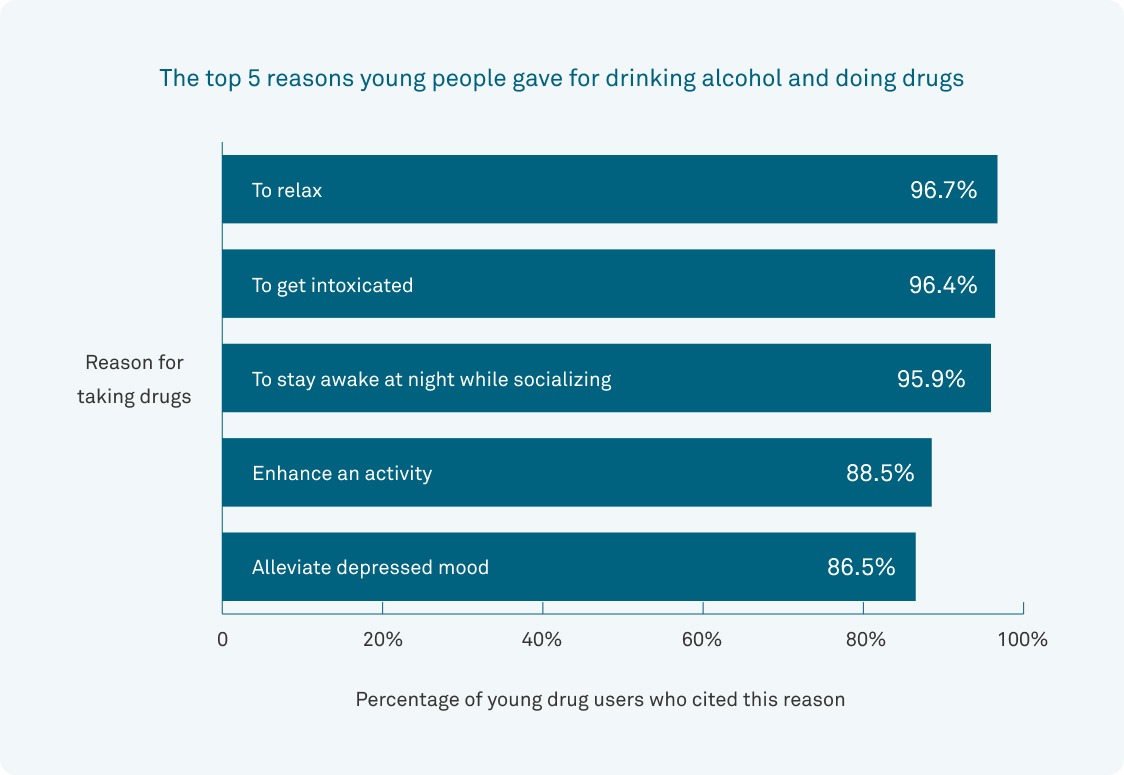
(Source: Health Education Research)
Staying awake while socializing was the third most common reason, with just under 96% claiming they used drugs or alcohol for this reason. This was over 7% more than the number who used drugs or alcohol to enhance an activity (88.5%) and nearly 10% more than those who used to alleviate a depressed mood.
How frequent is drug/alcohol use in college students?
A 2023 study covered by the National Institute on Alcohol Abuse and Health found that nearly half (49%) of students aged between 18 and 25 had drunk alcohol over the previous month.
The same study reported that around 30% had engaged in binge drinking over that period. Binge drinking is considered to be five or more drinks over a two-hour period for men and four or more drinks for women.
Over 1,500 college students aged 18 to 24 die from alcohol-related unintentional injuries each year, with a huge 696,000 being assaulted by another student who has been drinking. This highlights the dangers of excessive drinking.
Though not quite as prevalent as alcohol, drug use is common in college. The 2024 Monitoring the Future Survey found that 39.5% of students had used marijuana in 2023, with over one in 20 (5.3%) using cocaine and one in 40 using MDMA (2.9%).
Additionally, a study referenced in Science Direct found that 5.6% of college students reported non-medical use of prescription drugs in 2023.
Frequently Asked Questions About Substance Addiction at College
 To guarantee that all of our information is accurate, we ensure that all our sources are reputable. That means every source is authenticated and verified to be backed only by medical science.
Epiphany Wellness Editorial Guidelines
At Epiphany Wellness, we take your health and wellness seriously. We have a thorough process in place to ensure the integrity of information that is displayed on our website. All content published to our site undergoes a rigorous medical review by a doctorate level clinician to ensure medical accuracy.
Read More About Our Process
Schedule a Free and Confidential Consultation with Epiphany Wellness
 609-710-9423
 info@epiphanywellness.com